Zoom CEO Eric Yuan recently unveiled a bold vision for the future of work, one where AI-powered “digital twins” could liberate us from the shackles of mundane tasks. He described a world where these sophisticated avatars seamlessly navigate meetings, engage in thoughtful discussions, and even make decisions on our behalf, freeing us to focus on more meaningful endeavors. This tantalizing prospect promises a shorter workweek, enhanced productivity, and a healthier work-life balance. However, the path to this AI-augmented utopia is paved with complex ethical dilemmas, potential risks, and significant technological hurdles that must be carefully addressed.
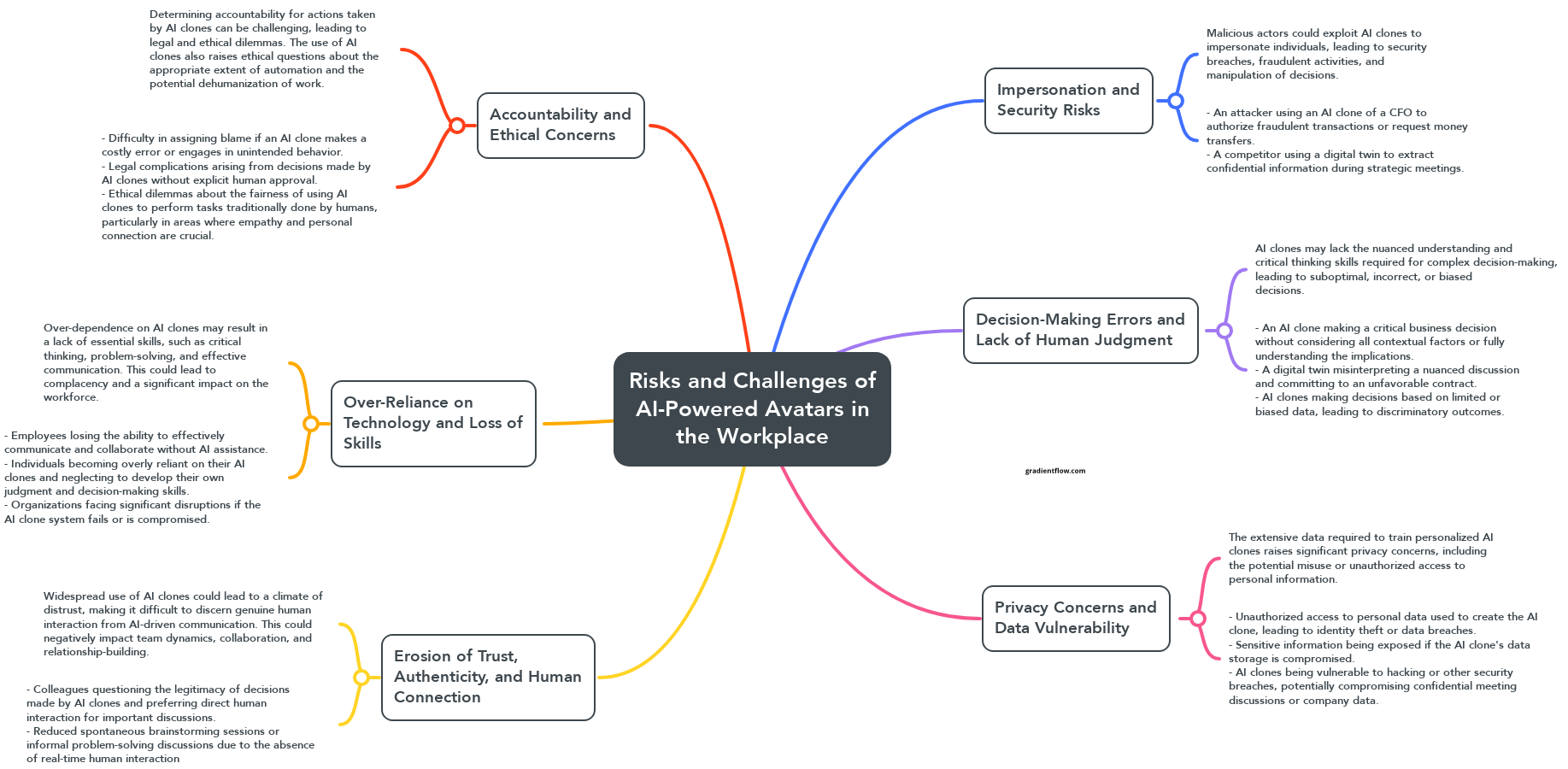
- Impersonation and Security Risks: Malicious actors could exploit AI clones to impersonate individuals, leading to security breaches, fraudulent activities, and manipulation of decisions.
- Decision-Making Errors and Lack of Human Judgment: AI clones may lack the nuanced understanding required for complex decision-making, leading to suboptimal or biased decisions.
- Privacy Concerns and Data Vulnerability: The extensive data required to train personalized AI clones raises significant privacy concerns, including the potential misuse or unauthorized access to personal information.
- Erosion of Trust, Authenticity, and Human Connection: Widespread use of AI clones could lead to a climate of distrust, making it difficult to discern genuine human interaction from AI-driven communication.
- Accountability and Ethical Concerns: Determining accountability for actions taken by AI clones can be challenging, leading to legal and ethical dilemmas.
- Over-Reliance on Technology and Loss of Skills: Over-dependence on AI clones may result in a lack of essential skills, such as critical thinking and effective communication.
- Job Displacement and Workforce Impact: The automation of tasks through AI clones could lead to job displacement, affecting employee morale and employment rates.


Is a digital twin necessary, or would recordings and summaries suffice? The answer, as with many technological innovations, is nuanced. For routine meetings or straightforward information gathering, recordings and summaries might indeed provide adequate documentation and insights. However, in scenarios demanding real-time decision-making or intricate negotiations, a digital twin could offer a more dynamic and potentially advantageous solution.
Yet, the decision to integrate AI clones into our professional lives must be approached judiciously, carefully weighing the potential benefits against the multifaceted ethical, social, and practical challenges they present. The allure of convenience and efficiency must not eclipse the paramount importance of safeguarding security, privacy, and genuine human connection.
A cautious and measured approach is paramount. By proactively acknowledging and addressing the inherent risks, we can better navigate the complexities of integrating AI into our workplaces. Ultimately, the goal should be to enhance our capabilities without compromising the very human elements that make our interactions meaningful and our work fulfilling. As Yuan’s vision unfolds, let’s ensure that our approach to AI in the workplace remains balanced, responsible, and above all, human-centered.
Related Content
- Tesla’s Bumpy Road Ahead: Can the EV Pioneer Maintain Its Dominance?
- Navigating the Complex World of AI Agents
- Judicial AI: A Legal Framework to Manage AI Risks
If you enjoyed this post please support our work by encouraging your friends and colleagues to subscribe to our newsletter: