

Meta today unveiled a significant shift in its content moderation strategy, discontinuing its third-party fact-checking program in the United States and introducing a “Community Notes” model for verifying and contextualizing user posts. Simultaneously, Meta will ease restrictions on certain political speech, now deemed part of mainstream discourse, while maintaining stricter enforcement for illegal content and high-severity violations. The company also plans to personalize political content in users’ feeds, allowing individuals to opt-in for increased exposure.
This post aims to provide a balanced analysis of these changes, exploring the strengths and weaknesses of both fact-checkers and community notes, rather than advocating for one over the other. While Meta positions these changes as a move towards broader participation in fact-checking and greater user autonomy over their feeds, skeptics express concerns that crowd-sourced notes could be vulnerable to popularity contests or orchestrated manipulation. Some observers welcome the new approach, while others argue that Facebook’s professional fact-checkers offer a more reliable framework, owing to their clear accountability and trained expertise. However, as the overview below explains, neither a top-down nor a community-driven strategy can fully resolve misinformation on its own, each presenting unique benefits and drawbacks.

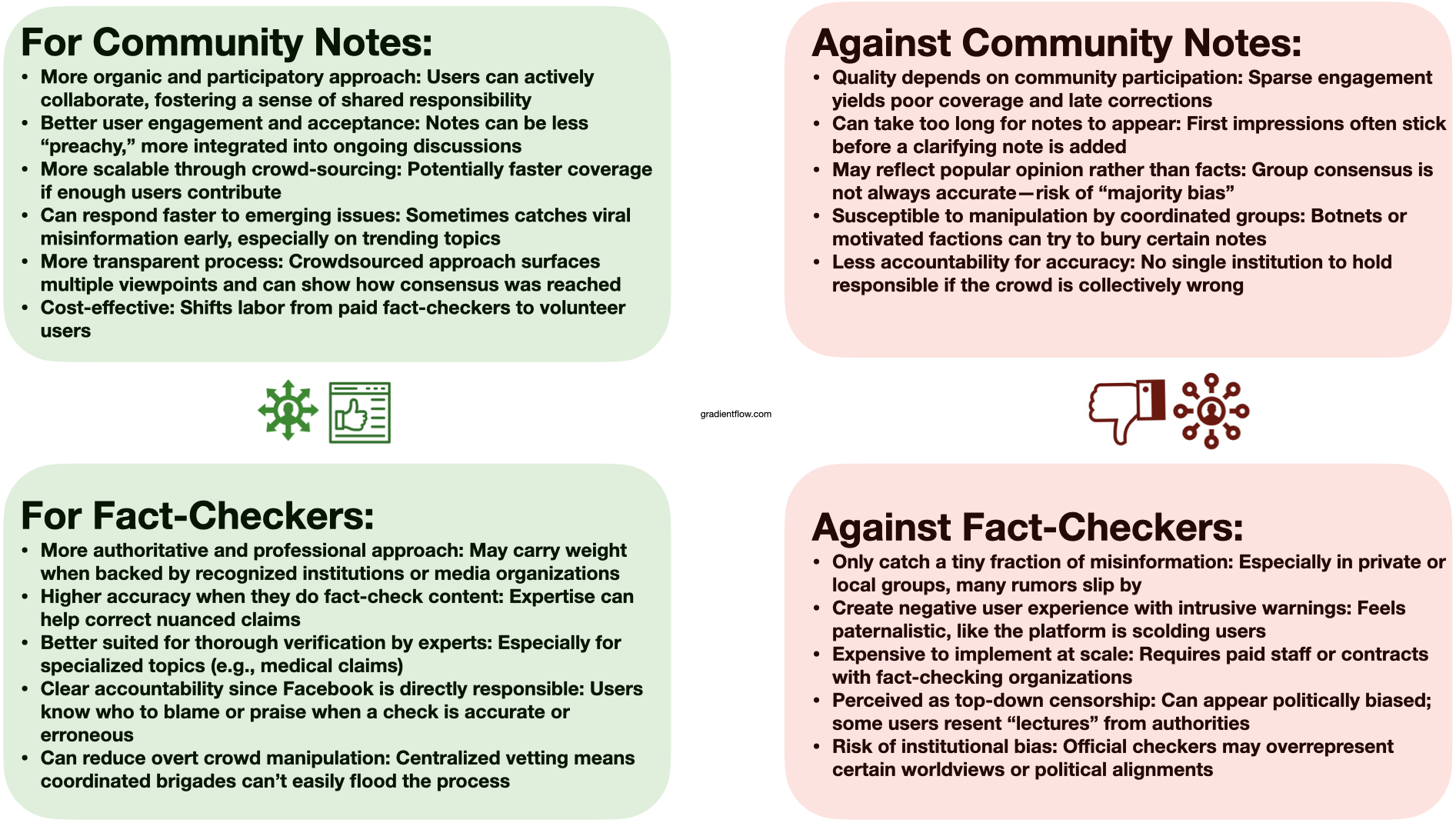
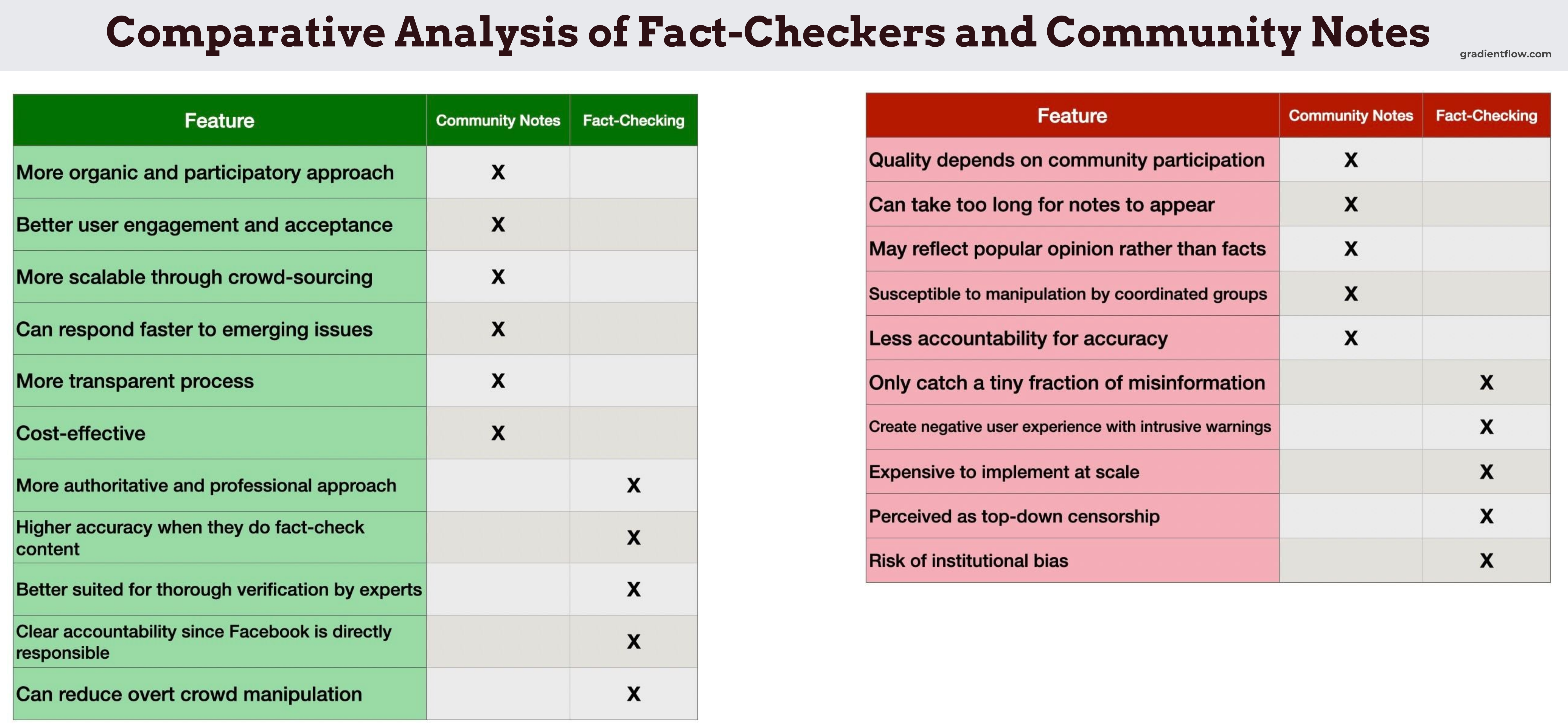
At first glance, fact-checkers offer professional standards and clear accountability, but they can suffer from scalability issues and feel heavy-handed or biased to some users. By contrast, community notes can encourage a wider range of voices and quicker updates, yet they rely heavily on the quality of contributors and can devolve into popularity-driven consensus. Nevertheless, those who believe that Facebook’s fact-checkers are ultimately a better product feature stress that the platform needs a more controlled, expert-led process to guard against widespread inaccuracies. Ultimately, content moderation requires navigating complex trade-offs—balancing user experience, cost, and political pressures—rather than settling on any singular, perfect solution.

If you enjoyed this post please support our work by encouraging your friends and colleagues to subscribe to our newsletter: