

Recent breakthroughs in voice cloning technology have been astounding, allowing for accurately reproducing an individual’s unique vocal characteristics using only a limited number of recorded samples. While the quality of the generated speech generally improves with the amount of available data, even short clips can produce convincing results. Although voice cloning can simulate speech in multiple languages, achieving true fluency and mastering complex grammar remain areas of ongoing development. One of the most impressive aspects of this technology is the ability to control various voice styles, including emotion and accent. Cutting-edge techniques such as VALL-E, DINO-VITS, and OpenVoice have contributed to the efficiency and effectiveness of voice cloning. As the technology advances, researchers are also developing tools to detect AI-generated speech, such as localized watermarking, which helps mitigate potential risks associated with voice cloning and ensures its responsible use.
Voice cloning is a fascinating but alarming new frontier. As someone who’s followed speech tech for years, I’m both excited and concerned. On one hand, it could enable compelling use cases like helping people with speech impairments communicate. But the potential for misuse is chilling – scammers cloning voices, fake recordings to smear people. I believe we need to proceed with extreme caution and have a serious public dialogue about safeguarding this powerful technology. The stakes are too high to simply charge ahead without carefully weighing the risks and putting protections in place.

There are groups of researchers working on mitigating risks of voice cloning technologies. For example, a recent paper describes three techniques for differentiating real voices from cloned ones designed to impersonate a specific person: perceptual features focusing on temporal characteristics, generic spectral features balancing accuracy and interpretability, and end-to-end learned features offering the highest accuracy. The researchers demonstrate the efficacy of these approaches in various scenarios, with the learned features consistently providing the best performance.
Policymakers are also taking action to address the risks posed by voice cloning technologies. The Federal Trade Commission (FTC) has launched the Voice Cloning Challenge, an initiative designed to tackle the current and potential future harms associated with AI-enabled voice cloning. The challenge aims to encourage the development of multidisciplinary solutions that protect consumers from fraud and the misuse of their biometric data and creative content. By recognizing both the benefits and risks of voice cloning technology, the FTC seeks to foster innovative ideas, promote consumer-level risk mitigation strategies, provide early warnings to policymakers, and encourage the development of responsible solutions to address this emerging technology.
We need to mitigate the risk of run-of-the-mill voice cloning attacks becoming widespread
We are engaged in a perpetual arms race. Malicious actors are constantly innovating and finding new ways to exploit these powerful tools, often staying one step ahead of those working to defend against such attacks. Our goal must be to continually raise the bar, making it increasingly difficult and costly for attackers to succeed.
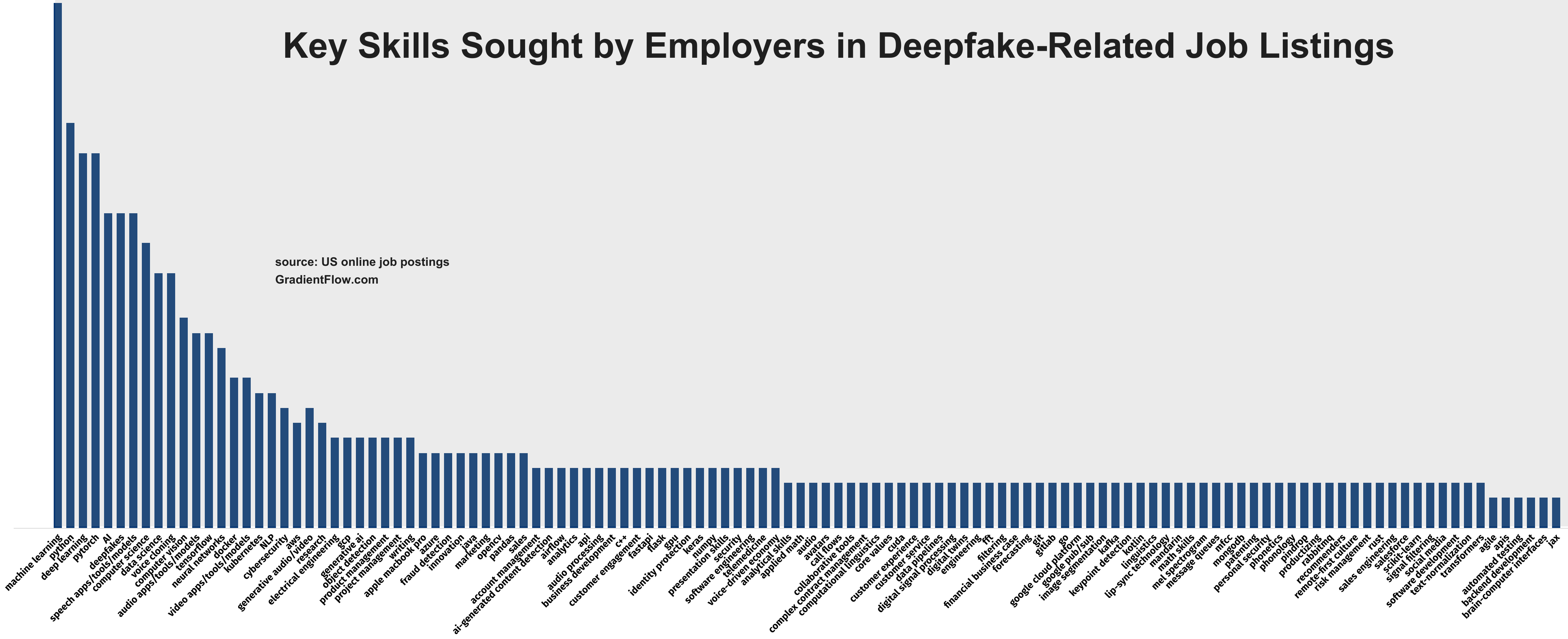
Data from recent online job postings reveals that machine learning, Python, deep learning, and PyTorch are the most sought-after skills in deepfake-related job listings, indicating a strong demand for professionals with expertise in these areas. The presence of skills such as computer science, data science, and computer vision suggests that employers are looking for candidates with a solid foundation in these disciplines to tackle the complex challenges associated with deepfakes. Additionally, the inclusion of skills like speech and audio applications, voice cloning, and generative audio/video highlights the growing importance of audio and voice-related technologies in the deepfake job market, signaling a shift towards more advanced and sophisticated deepfake techniques.

While we may never fully eliminate the threat posed by well-resourced adversaries like nation-state actors, we can work to develop robust safeguards that at least mitigate the risk of run-of-the-mill voice cloning attacks becoming widespread. This will require ongoing collaboration between researchers, technologists, policymakers and other stakeholders to create frameworks for responsible innovation and proactive defense. We need more developers to step up and build better defensive solutions against malicious voice cloning, and for venture capital to fund promising startups innovating in this critical space. Only by taking decisive action now can we get ahead of this threat and secure our voice-based systems for the future.
Additional resources:
- The State Of Generative AI For Audio
- The Terrifying A.I. Scam That Uses Your Loved One’s Voice
- Beware the Artificial Impostor (McAfee report)
- The last stand of the call-centre worker
- FTC: Voice cloning challenge
- Single and Multi-Speaker Cloned Voice Detection: From Perceptual to Learned Features
- Deepfakes and the 2024 Election
- Industry of Anonymity: Inside the Business of Cybercrime
If you enjoyed this post please support our work by encouraging your friends and colleagues to subscribe to our newsletter: