Author: Ben Lorica
-
why your data stack is about to get less forgiving
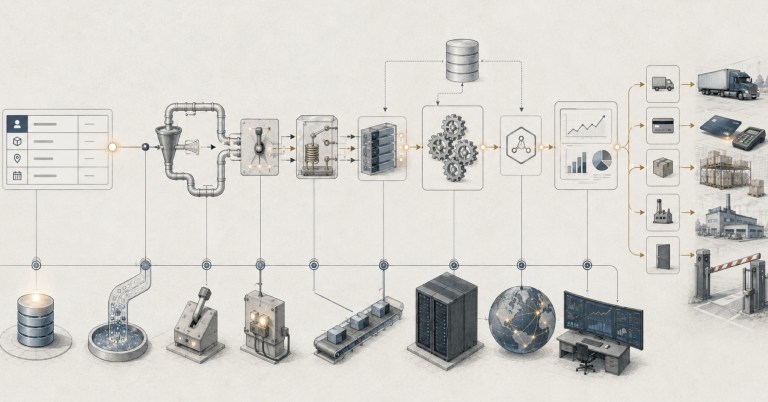
Stale Data Used to Be Annoying Imagine a procurement agent checking inventory and deciding that stock has fallen below the reorder threshold. It places another order. The problem is that a large delivery was recorded a…
-
When Work History Becomes an AI Asset
Google recently agreed to pay $10 million for the internal business data of Spirit Airlines. The airline is bankrupt, but its emails, Teams messages, software, spreadsheets, and operating records apparently still have value. Google plans to…
-
so Google just paid $10 million for an airline’s Teams messages
When Work History Becomes an AI Asset Google recently agreed to pay $10 million for the internal business data of Spirit Airlines. The airline is bankrupt, but its emails, Teams messages, software, spreadsheets, and operating records…

-
Water, Noise,Power: The Real Costs of Data Centers
I expect AI data centers to become a major issue in the 2028 presidential primaries, particularly on the Democratic side. I recently argued that the case for building more data centers and compute is getting lost…

-
Self-Improvement Without the Science Fiction
A few weeks ago I wrote about AI systems that keep learning after deployment instead of treating every interaction as a fresh start. That prompted a few readers to ask about recursive self-improvement (RSI). The connection…

-
Your AI model is a rental (but the loop is an asset)
Self-Improvement Without the Science Fiction A few weeks ago I wrote about AI systems that keep learning after deployment instead of treating every interaction as a fresh start. That prompted a few readers to ask about…

-
China’s AI Involution
AI has made me pay more attention to a Chinese term that has been circulating for years: involution (内卷). The basic idea is hyper-competition in which everyone has to work harder and improve constantly just to…

-
Your Model Is Not Your Moat
In a recent article, I wrote about companies turning their own data, workflows, and production feedback into specialized intelligence they increasingly control. The deeper idea was compounding. What matters is not simply whether a model performs…

-
if everyone rents the same intelligence, what’s left?
Your Model Is Not Your Moat In a recent article, I wrote about companies turning their own data, workflows, and production feedback into specialized intelligence they increasingly control. The deeper idea was compounding. What matters is…

-
The AI Boom’s Hidden Payment Schedule
A recent article, “Why the AI Boom Is Hitting a Reset Wall,” makes an argument I think is more useful than the usual debate over whether AI is a bubble. The question is not whether AI…
